
Compared
Personalized books vs. videos for kids: which one lasts?
· 7 min read
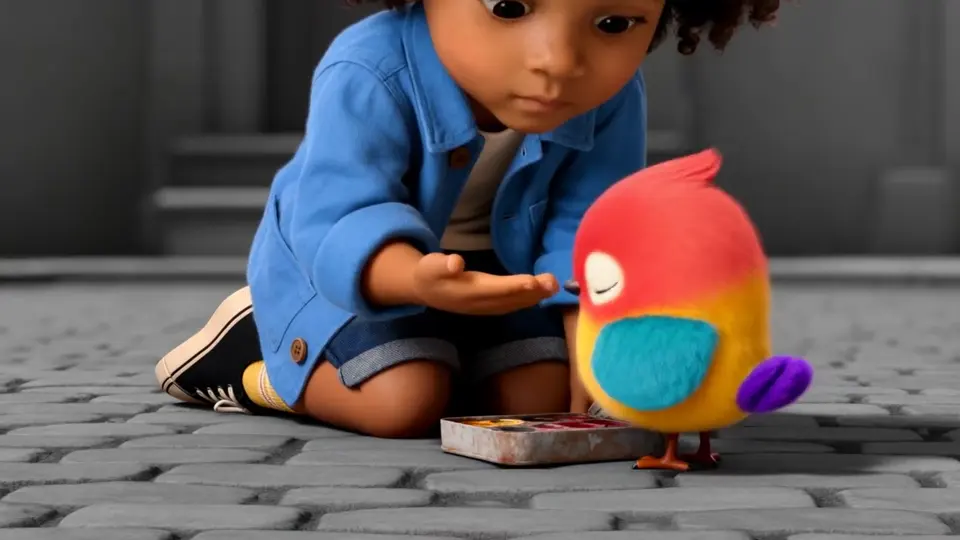
Personalized children's books have been around since the 1980s, when a company could print your kid's name into a story about a birthday on the moon and charge $20 for it. Personalized videos are newer, and in the last two years they have gone from "Santa says your name" to short animated films where a child's face is the hero's face.
We make the films. So here is the comparison we would want to read if we were buying, including the parts where the book wins.
What each one actually personalizes
A personalized book puts the child's name in the text and, in the better ones, a drawn character that matches their hair, skin, and sometimes glasses or freckles. Wonderbly, Hooray Heroes, and I See Me! are the big names, with most titles between $25 and $45 as of October 2026. The character is a likeness in the way a nice caricature is a likeness: recognizable, not photographic.
A personalized film, at least the kind we make, starts from a real photo. The child on screen has their face: the shape of it, the hair, the expression. They move, they look afraid, they fly. The name is in the story too, but the face is the thing. A four-year-old sees it and says "that's me" before anyone explains.
Cheaper video products personalize less. The $8 to $25 Etsy clips and Cameo Kids messages (around $25 to $30) use the name and sometimes a photo in a frame. They are greetings, not stories, and they are not what this comparison is about.
Where the book wins
Bedtime. A book fits into the routine that already exists. You read it on the bed with the lamp on, you do the voices, and the child's name shows up in your mouth, which is its own kind of magic. No screen, no "one more time" negotiation, no blue light. If the house has a firm no-screens-after-dinner rule, the book is the gift that gets used every night and the film is the gift that gets used on Saturday mornings.
Durability, in the physical sense. A hardcover survives juice. It goes on the shelf, it gets packed in the move, it turns up in a box twenty years later with the dedication page still legible.
Reading itself. A five-year-old learning letters will hunt for their own name on every page. That is a reading lesson disguised as a story, and no film does that.
Where the film wins
The moment. Nothing we have seen matches a child recognizing their own moving face in a story. Kids go still, then they laugh, then they point. Parents film the reaction. Grandparents watch it over a video call and get to see the face. A book produces a quieter, slower pleasure; a film produces an event.
Likeness. A drawn character with the right hair is a stand-in. A face is the child. For a kid who is shy, or who has never seen anyone who looks like them on a screen, this is not a small thing.
Re-watching, in a different way than re-reading. A story with a scare in the middle and a triumph at the end (ours have a frightened dragon, an ocean to cross, a secret island) is the kind of thing a four-year-old plays on loop. The best films are built like the picture books they already love, with a narrator rather than a cartoon voice, so they hold up at the tenth viewing.
Speed. Our films arrive in two business days. Books vary: Hooray Heroes prints in three business days and then ships; Wonderbly's shipping runs five to fourteen days by most 2026 accounts. If the birthday is Thursday, the film is the one you can still order on Monday.
Which one do they keep?
Both, in different ways, and this is the honest answer.
The book is kept as an object. It outlives the phase where the kid cares about it and comes back as nostalgia.
The film is kept as a record. Three years on, the four-year-old's face in it is the thing parents value most, because that face is gone. It becomes a home movie with a plot. It gets rewatched on the next birthday, which we did not plan for and now think is the best thing about it.
If we had to pick one for a child under five, we would pick the film, and we accept that we would say that. If the child is six or seven and reading, or if the gift is from a grandparent who will be doing the bedtime reading, the book is the better fit.
Or buy both, cheaply
A personalized book and a personalized film together cost about $70 to $80 as of October 2026, which is less than one large plastic playset and will outlast it by a decade. The book is for bedtime; the film is for the morning after. That is what we would do.
If you want to see the film side of the comparison, Around the World is the one we would start with: a child, a companion, and a trip across the whole map. Watch the trailer with the sound on.
See what a personalized film looks like.
Around the World is a five-minute animated voyage with your child in the lead, made from one photo.